Thu Aug 13
Triple glazed timber windows pair an engineered timber frame with a three-pane glass unit, and the numbers back up the sales pitch: whole-window U-values as low as 1.1 W/m²K, comfortably inside Passivhaus-aligned targets.
That’s a real cut in heat loss compared with standard double glazing, and you’re not trading away the warmth or character of a traditional timber frame to get it.
Short version: for energy-conscious projects, triple glazing in a timber frame earns its premium. If you want the detail behind that answer, read on.
What makes triple glazed timber windows perform?
Three panes of glass, two argon-filled cavities between them – that’s the basic recipe, and it cuts heat transfer through the glass dramatically versus double glazing.
The frame matters just as much as the glass. Timber conducts heat poorly, so it works with the glazing rather than undoing its good work – unlike aluminium, which tends to let heat slip straight through.
TRC’s engineered timber frames come in redwood, hardwood, Accoya or oak, each factory finished with a three-coat microporous paint or stain.
Put it together and you get a whole-window U-value of 1.1 W/m²K on our triple glazed timber sash windows, dropping to 0.79 W/m²K on triple glazed flush casements.
Understanding U-values: The numbers that matter
Approved Document L currently sets a minimum whole-window U-value of 1.4 W/m²K for replacement windows in existing dwellings. Triple glazed timber beats that by some distance, which is why it’s the obvious specification for projects chasing EPC Band A, net zero targets, or Passivhaus certification.
Is triple glazing worth the cost premium?
This depends on the project. A standard residential refurb in a mild microclimate might get by fine on double glazing. But for new builds, energy-led refurbishments, or anything where comfort and running costs sit high on the priority list, triple glazing pays for itself over time.
A few things worth weighing up: Accoya and hardwood frames cost more upfront than redwood but hold their dimensions better and need less maintenance. Triple glazed units are heavier too – in sash windows that’s handled with a weight-and-pulley system built for the extra load, so operation stays smooth. Then there’s the whole-life arithmetic: lower heat loss means lower bills, and on a development of 20-plus units that saving adds up fast. Specifying triple glazing now also buys headroom against regulations that only seem to tighten.
For timber sash windows specifically, TRC fits a 40–48mm sealed triple-glass unit into the frame, keeping the sightlines of a traditional sash while quietly upgrading the thermal performance behind them.
Acoustic performance: The overlooked benefit
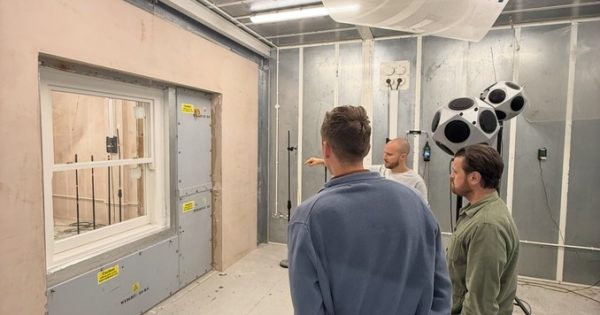
Everyone talks about the thermal numbers, but ask an occupant what they actually notice day to day and it’s often the quiet. The extra mass and the additional air cavities in a triple glazed unit both help attenuate sound, and TRC’s triple glazed sash and casement windows carry tested acoustic ratings suited to urban residential settings.
That’s a genuine selling point on conservation area or dense urban schemes. Pair it with draught-proofing and trickle ventilation and you’ve got a window that performs thermally and acoustically without choking off fresh air. Where noise reduction is the main driver, we also make acoustic sash windows with laminated glass rated to higher dB values.
Frame implications: Weight, profiles, and opening configurations
A third pane adds weight, and that has knock-on effects for hardware and fixing details, particularly on sash windows and side-hung casements.
Sash windows use TRC’s weight-and-pulley system, engineered to balance the heavier sashes and keep them running as a traditional sash should, with safety restrictors limiting the opening to 100mm where needed. Casement windows come in side-hung, top-hung and bottom-hung configurations, each fitted with hardware chosen to carry the extra load without the frame distorting over time.
Timber species matters here too. Accoya – a modified softwood with unusually good dimensional stability – handles the added glazing weight well, resisting the swelling and shrinkage that can undermine tight tolerances and weather seals. Every TRC triple glazed window is factory-fitted and factory-finished, so the seal between frame and glass is right before it ever leaves the workshop.
Passivhaus and high-performance residential projects
Triple glazed timber windows are now a fairly standard specification on Passivhaus projects and low-energy new builds. Combine a thermally broken timber frame with a triple glazed unit, warm-edge spacer bars and argon-filled cavities, and you can get whole-window U-values close to, or within, Passivhaus Institute targets.
TRC Contracts works alongside architects and developers at specification stage, providing U-value calculations, technical drawings and BIM objects to support planning submissions and detailed design.
If you’re specifying for a Passivhaus-aligned scheme, a net zero development, or a high-end residential project where the windows carry real weight in the envelope’s performance, get in touch with TRC Contracts to talk through the specification.