Mon Jun 22
The built environment accounts for around 26% of the UK’s total carbon emissions, according to the UK Green Building Council – and windows are one of the most significant variables in a building’s thermal performance.
For architects working on heritage schemes, period properties or new-build projects that require a traditional aesthetic, the challenge is straightforward: how do you specify a sash window that meets modern energy performance standards without compromising design integrity?
The answer lies in understanding what modern timber sash windows can actually deliver – and selecting the right specification for each project.
Why timber sash windows are worth specifying
There is a persistent assumption in some quarters that timber windows and energy efficiency are difficult to reconcile. It isn’t accurate. Timber is a naturally low-conductivity material, which means well-constructed timber window frames inherently outperform aluminium and uPVC on thermal grounds when assessed across the whole-life cycle of the building. Sustainably sourced timber also carries a significantly lower embodied carbon cost than alternative frame materials.
For projects in conservation areas or involving period properties, timber sash windows are often the only compliant option. The argument for specifying them on energy performance grounds is, increasingly, just as strong.
The main routes to energy efficiency in sash windows
Advanced glazing options
Glazing is where the most significant thermal performance gains are achievable in a sash window specification. There are three principal options:
Double glazing – the standard specification for most modern sash windows. A well-constructed double glazed unit with a warm-edge spacer bar and argon gas fill will deliver a meaningful improvement over single glazing in terms of heat loss reduction.
Triple glazing – TRC Contracts offers triple glazed timber sash windows for projects where maximum thermal efficiency is required. Three panes of glass with two insulating cavities reduce U-values substantially compared to standard double glazing, making triple glazing worth considering for exposed or north-facing façades.
Vacuum glazing – TRC Contracts’ vacuum glazed timber windows offer a technically sophisticated alternative for heritage projects where rebate depth is a constraint. A vacuum cavity between the panes eliminates the need for a wide spacer bar, allowing near-single-glazing sight lines with thermal performance approaching that of triple glazing. For conservation areas where planning officers require the visual appearance of traditional single-pane glazing, this is often the most practical and technically sound route.
Draught proofing
Heat loss through a sash window is not solely a glazing problem. Air leakage around the meeting rail, staff bead and parting bead can account for a substantial proportion of a window’s overall thermal inefficiency. Draughty sash windows are a common finding on pre-improvement thermal surveys of period properties.
TRC Contracts’ draughtproofing service addresses this through hidden, rebated sealing strips installed at the key movement points of the sash. The Draftfix system, which TRC has used for over 15 years, reduces air leakage by up to 50%. The result is a measurable improvement in thermal efficiency alongside smoother window operation – and a notable reduction in heat loss without the need for full window replacement.
For restoration projects where the original sash windows are to be retained, draughtproofing is frequently the most cost-effective and proportionate first step.
Thermally efficient window frame construction
The window frame itself plays a significant role in overall energy performance. Timber’s natural insulating properties give it an inherent advantage over metal frames, but construction quality matters. TRC Contracts’ new timber sash windows are manufactured to exacting tolerances, with well-fitted frames that minimise air infiltration and support the thermal performance of the glazing unit.
Do energy-efficient sash windows affect traditional aesthetics?
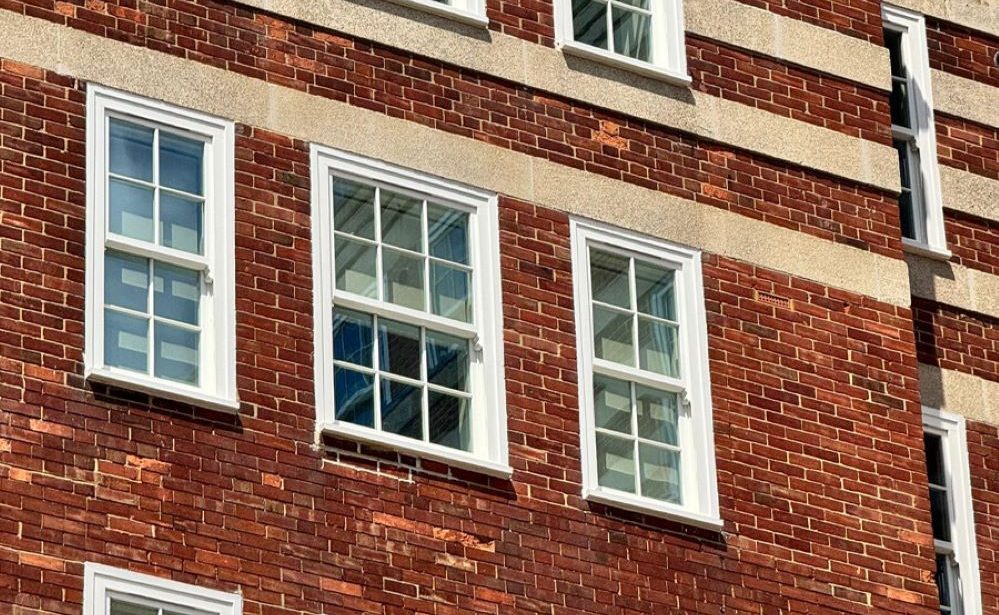
Not with the right specification. Modern sash windows can accommodate advanced double glazing and vacuum glazing units within slimline profiles that maintain the proportions and sight lines of the original. For conservation areas, vacuum glazed units are particularly well-suited – the absence of a wide cavity means the glazing bar and glass proportions remain consistent with traditional aesthetics. Planning compliance and energy performance are not mutually exclusive.
Key takeaways for specifiers
- Timber window frames are naturally low-conductivity and carry lower embodied carbon than aluminium or uPVC
- Double glazing, triple glazing and vacuum glazing each suit different project requirements – glazing choice should be informed by conservation constraints, U-value targets and rebate depth
- Draughtproofing is a high-value, low-disruption intervention for retained sash windows
- Vacuum glazing offers near-triple-glazing thermal performance within a single-glazing profile – the optimal choice for many conservation area schemes
- Thermal efficiency and traditional aesthetics are compatible with the right specification
Speak to TRC Contracts about your project
Whether you are specifying new energy-efficient sash windows for a heritage development or planning a thermal upgrade to existing windows on a period property, TRC Contracts can provide technical support from specification through to installation.
Contact the TRC Contracts team to discuss your project requirements, or explore the full new timber windows range to find the right solution.