Tue Mar 10
Painting timber windows correctly comes down to three things: dry, clean, sound timber; a compatible primer and paint system; and timely maintenance every five to seven years.
Get those three right and a well-painted wooden window will resist rot, weathering and premature decay for decades.
Why painting timber windows matters more than most people realise
Paint on a timber window is rarely about aesthetics alone. It is the primary line of defence against moisture, UV degradation and fungal decay. When that film breaks down, even briefly, water finds a way in.
Timber windows exposed to the UK climate sit at a moisture content of between 9% and 14% for most of the year when properly protected. If the moisture content rises above 20%, conditions become ideal for dry rot to germinate. Above 22% and wet rot fungi can also take hold. A failing paint film is almost always what tips that balance.
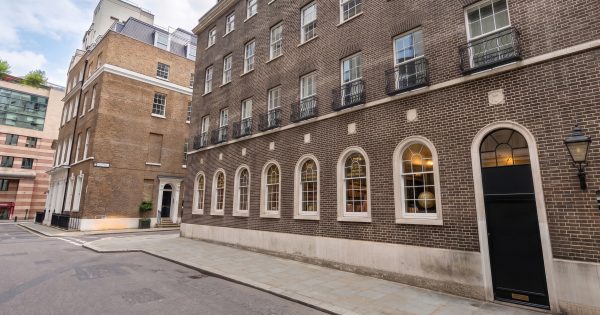
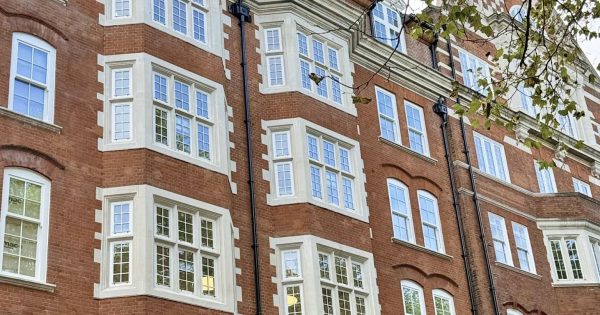
The stakes are especially high on heritage and listed properties. At TRC Contracts, we have spent over 30 years restoring historic timber sash windows on some of the UK’s most significant buildings, from Somerset House to Grosvenor House. In that time, the single most consistent finding is this: the buildings that avoided costly decay were the ones where painting and maintenance had never been allowed to lapse.
How to assess timber windows
Before a brush touches the timber, you need to know what you are working with. Painting over unsound wood is one of the most common and expensive mistakes made during timber window maintenance.
Checking for rot and structural weakness
Start with a physical inspection. Work around the full frame, paying particular attention to:
- Bottom rails and sill corners – these are the most vulnerable areas, collecting rainwater that splashes from the threshold or runs off the sash above
- Glazing bar junctions – small joints that are easy to overlook but quick to trap moisture
- End grain at joints – end grain acts like a bundle of open tubes, absorbing water at a far higher rate than face grain
When to call in a professional
If any of the following apply, seek specialist advice:
- Soft timber across more than a quarter of any section
- Evidence of dry rot (white cotton-like mycelium, or brittle, cube-cracked wood)
- Cracked or failing putty across multiple panes
- Windows on a listed building or within a conservation area
TRC Contracts offers a professional window restoration service for exactly these situations, combining resin repair, draught-proofing and full decoration into a single programme.
Surface preparation: The stage that determines everything
Skilled decorators will tell you that 80% of a good paint job happens before the first coat is applied. That is even more true on exterior timber windows, where the film has to survive thermal movement, UV exposure and driving rain.
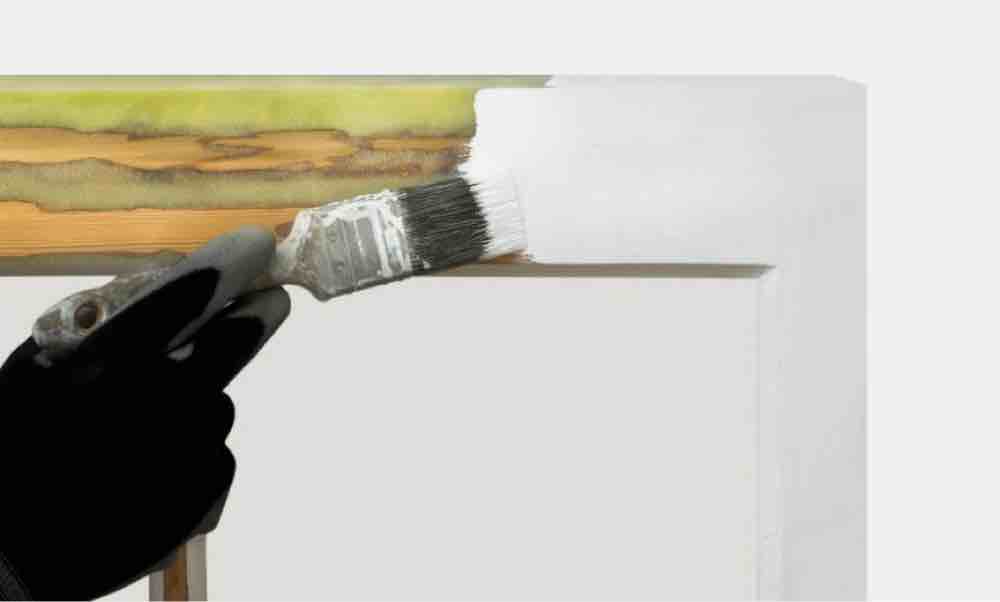
Stripping old or failing paint
Where paint is flaking, cracking or bubbling, it must be removed back to a sound substrate. Options include:
- Heat gun – effective on thick historical build-ups
- Chemical stripper – useful for detailed mouldings and glazing bars where a heat gun is awkward to control
- Mechanical scraping – for loose, flaking sections; use a hooked scraper or shavehook for rebates
If windows have not been maintained for many years, there is a real possibility that older paint layers contain lead. This is particularly common in properties built before 1970. Before dry sanding, test with a lead paint detection kit. If lead is present, wet-sand only, wear a P3 respirator and dispose of waste in line with local regulations.
Putty and sealant condition
Linseed oil putty is inherently brittle and generally shrinks away from glass over time. Failed or cracking putty is one of the primary causes of open joints and in-situ wood decay because it allows water to creep directly into the glazing rebate. Rake out any putty that has pulled away from the glass, is crumbling or has lost elasticity.
When reputtying, traditional linseed putty remains appropriate for heritage work. However, on modern windows or where long-term flexibility is a priority, consider an elastic glazing sealant such as Repair Care Dry Seal, which TRC uses on restoration contracts. It is paintable with both opaque and translucent finishes and offers superior resistance to moisture ingress compared with traditional putty.
Allow fresh putty to cure for a minimum of four weeks before painting. Painting too early traps solvents and leads to premature cracking.
Filling cracks and holes
For minor surface cracks, use an exterior-grade flexible wood filler. For sections where decay has been removed, a two-part epoxy resin filler gives a harder, more durable repair. Apply in layers no deeper than the manufacturer specifies, allow each layer to cure fully, then sand flush.
End grain at joints and sills deserves particular attention. These areas absorb water at the highest rate and are often the most neglected. Apply a liberal coat of wood preservative or end-grain sealer before priming.
Painting timber windows on listed buildings and in conservation areas
Heritage properties present additional constraints that are worth understanding before you start.
Approved paint systems for heritage work
On listed buildings, the choice of paint system may be governed by planning conditions or guidance from the local conservation officer or Historic England. TRC follows Historic England and English Heritage guidelines on all heritage contracts. In practice, this often means:
- Retaining traditional gloss finishes to match the historical appearance
- Using lead-free linseed oil paint or high-quality alkyd systems rather than purely water-based alternatives
- Matching colour to the original specification, which may require custom tinting
Summary: The non-negotiable rules of painting timber windows
| Rule | Why it matters |
| Never paint damp timber | Poor adhesion; blistering; accelerated decay |
| Replace failed putty before painting | Broken seal = water ingress = rot |
| Seal all end grain | End grain absorbs water at the highest rate |
| Use a compatible primer | Adhesion failure without it |
| Apply at least two topcoats externally | Single-coat coverage is insufficient for weather resistance |
| Inspect annually | Early detection keeps repair costs minimal |
| Repaint every five to seven years | Prevents the cumulative paint failure that allows moisture in |
Need professional help with timber window painting or restoration?
TRC Contracts provides a complete service, from initial window condition surveys through timber repair, draught-proofing and full internal and external decoration. We work with homeowners, maintenance teams, architects and conservation officers across London and the UK.