Mon Mar 9
If timber windows feel soft, show paint that is bubbling or flaking, or carry a faint musty smell, they likely have timber rot. The short answer: catch it early and the wood can almost always be saved.
This guide walks you through diagnosing decay, choosing the right repair method, and protecting the timber so the problem does not return. Where damage is too extensive for in-situ repair, we explain when specialist intervention or targeted replacement is the right call.
What causes timber rot in wooden windows?
Timber is a durable, long-lived material when it stays dry. The problem begins when moisture content rises. Fungi require a moisture content of around 20% or above to germinate and grow, which is why exposed or poorly maintained window frames are the most common victims of decay in UK properties.
The three main entry points for moisture in window frames are:
- Failed glazing putty. Linseed oil putty is inherently brittle and shrinks away from the glass over time. Once a gap opens, every rain event drives water directly into the end-grain of the timber, where absorption is fastest.
- Breaks in the paint film. Timber that has not been repainted regularly loses its protective coating, exposing the wood beneath to prolonged wetting.
- Poor drainage at sills and joints. Window sills are the lowest point of the frame assembly and bear the brunt of pooling rainwater. They are typically the first component to fail.
Wet rot vs dry rot: Knowing which you are dealing with
Getting the diagnosis right matters because the two types of decay behave differently and require different treatments. Applying the wrong approach wastes time and money and may allow damage to spread.
Wet rot
Wet rot is the more common of the two. It is caused by a group of fungi, most frequently *Coniophora puteana* (cellar fungus), that thrive where timber is persistently damp. Wet rot stays localised to the moisture source. Remove the water and you stop the spread.
Signs of wet rot in window frames:
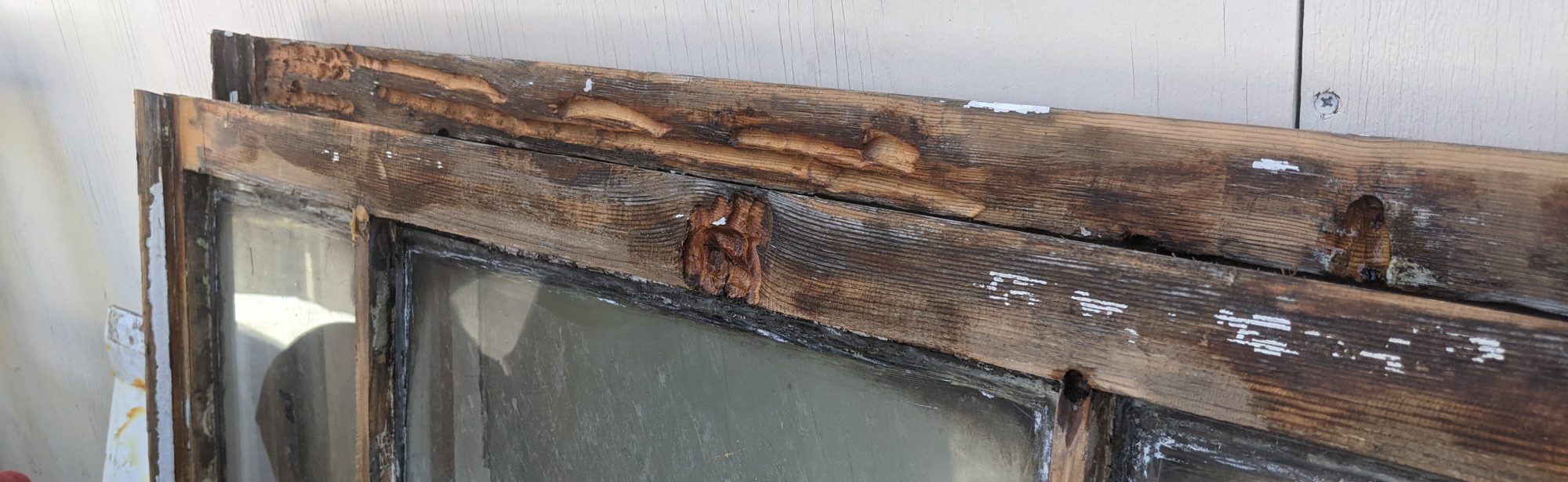
- Wood feels soft and spongy to the touch
- Timber looks darker than the surrounding healthy wood
- Surface is cracked or crumbling at the edges
- A damp, musty smell is present
- Paint bubbles, flakes, or pulls away cleanly from the surface
Dry rot
Dry rot (*Serpula lacrymans*) is the more serious of the two. It is a brown-rot fungus that feeds on the cellulose and hemicellulose in timber, leaving it brittle, cracked into characteristic cube-like sections, and structurally compromised. Unlike wet rot, dry rot can spread across masonry and through walls to reach timber it has not yet touched, making early professional diagnosis critical.
Signs of dry rot:
- Cuboidal cracking across and along the grain
- Wood that crumbles or shrinks noticeably
- Fine white thread-like strands (mycelium) on or beneath the surface
- A fruiting body resembling a flat mushroom with a rusty-orange centre
- Dusty orange-brown spore deposits on surrounding surfaces
Key distinction: Wet rot stays put. Dry rot travels. If you suspect dry rot anywhere in a heritage building, stop work and bring in a specialist before any remediation begins.
How to diagnose timber rot in wooden windows: A step-by-step assessment
You do not need specialist tools to carry out a first-pass inspection. Work through the following in order.
Step 1: Visual scan
Stand outside and look at the full frame assembly in good light. Focus on:
- The sill (bottom horizontal member) and bottom rail of the lower sash
- Any glazing rebates where putty has shrunk or cracked
- Joints and corners where two pieces of timber meet
- Any paint that appears blistered, cracked, or pulling away
Step 2: Probe test
Use a sharp instrument such as a bradawl or the tip of a screwdriver. Work methodically along the sill, bottom rail, and any suspect areas. Healthy timber resists the probe and springs back. Decayed timber accepts the point easily and may crumble on withdrawal.
Step 3: Moisture reading
A digital moisture meter gives you an objective reading. For exterior timber windows, a healthy moisture content sits between 9% and 14%. Readings above 20% indicate conditions where fungal decay can take hold. Readings of 40–60% confirm that wet rot is already well-established.
Step 4: Check the source
Before planning any repair, find out where the water is coming from. Common sources include failed putty, cracked paint, blocked sill drainage, overflowing gutters, and defective flashings above the window head. Repairing the timber without eliminating the moisture source is wasted work.
Can rotted timber windows be repaired on listed buildings?
Yes, and in most cases repair is the preferred and required approach. Listed Building Consent typically cannot be obtained for wholesale replacement where the existing fabric is capable of being repaired. Conservation officers favour a repair-first philosophy that retains the original material for as long as possible.
The Repair Care epoxy system used by TRC Contracts is widely accepted by conservation authorities precisely because it is applied in situ, does not alter the appearance or profile of the window, and preserves original timber that would otherwise be lost.
Where replacement of an entire window is unavoidable, TRC manufactures heritage sash windows to match the exact profile, glazing bar dimensions, and glass type of the original.
For buildings in conservation areas, it is also worth noting that the Society for the Protection of Ancient Buildings (SPAB) publishes guidance on repair techniques that align with the philosophy TRC works to in practice.
Frequently asked questions about timber rot repair
Can you repair a rotten window without replacing it?
In most cases, yes. The key variable is how much of the frame has been affected. Localised decay affecting one component, such as a sill or bottom rail, is routinely repaired using epoxy resin systems or splice repairs without touching the rest of the window. Full replacement is only necessary when multiple structural components have failed or when the extent of decay makes repair uneconomical.
How long does a timber rot repair last?
A professionally executed epoxy repair, properly primed and painted, will outlast the surrounding timber if the moisture source is resolved. The Repair Care system used by TRC produces repairs that are harder and less permeable than the original softwood. Maintenance of the paint system is the key factor in long-term durability; a well-painted repair can last the full service life of the window.
Does timber rot spread to other parts of the building?
Wet rot stays confined to the area of persistent moisture. Dry rot can spread through walls, across masonry, and into adjacent timber if conditions allow. For any suspected dry rot, the investigation should extend well beyond the visible affected area.
Get expert advice on timber rot repair from TRC Contracts
TRC Contracts has been restoring, repairing, and replacing heritage timber windows across the UK for over 30 years. From a single rotten sill on a Victorian terrace to a planned maintenance programme across a listed estate, the team brings the same level of specialist knowledge and quality control to every project.
If you have windows showing signs of decay, the right first step is an honest assessment. Contact TRC Contracts to discuss a condition survey or to speak with a specialist about your specific situation.